When the power goes out, having the right generator can make a big difference for your family’s safety and comfort. But before choosing one, you need to understand what size generator your home requires. Too small, and it won’t handle your essential appliances. Too large, and you’ll spend more than necessary on fuel and equipment. At Putnam Mechanical in Mooresville, NC, we help homeowners find the perfect generator size for reliable comfort and safety.
What Size Generator Do You Need?
To determine the correct generator size, you need to calculate your home’s total power requirements. Every appliance, light, and device in your home uses a specific amount of wattage. Adding up the total wattage of what you plan to power gives you a base number. It’s important to identify what you truly need to run during an outage, rather than relying on every device in your home.
Start by listing essentials such as the refrigerator, HVAC system, water heater, and lighting. Then include important items like the oven, microwave, or television. Once you know which appliances you want to run, check their wattage ratings. You can usually find these on the manufacturer’s label or user manual.
For example, refrigerators typically use 400 to 800 watts, while a central air system may need 2,000 to 5,000 watts. Add these numbers together to determine your power needs. From there, select a generator that can handle around 20% more wattage than you figured. That extra percentage prevents overload and keeps your generator running smoothly.
Understand the Difference Between Running and Starting Watts
Running watts refer to the steady energy your devices need once operating. Starting watts are the surge of power required to get the motors and compressors running, like when the refrigerator cycles on. If you ignore this difference, the generator could trip when running multiple appliances all at the same time.
Square Footage Matters
Once you’ve figured out your wattage estimate, you need to consider your home’s square footage. Larger homes with more rooms, lighting, and HVAC zones require higher-capacity units. A small home may need a generator that produces 5,000 to 7,000 watts, while an average-sized home could need 8,000 to 12,000. If you have a larger home, you may need a generator capacity of 20,000 watts or more.
Is Your Electric Panel Compatible?
Another important factor in generator sizing is your home’s electrical panel. Some older homes may not support large standby systems without panel upgrades. Our professionals can assess your electrical capacity and recommend improvements that would allow for a standby system installation.
What are the Generator Options?
There are two main types of generators. It’s helpful to learn about the kinds and how they affect power output. Our experts can walk you through the options to help you make an informed decision.
Standby Generators
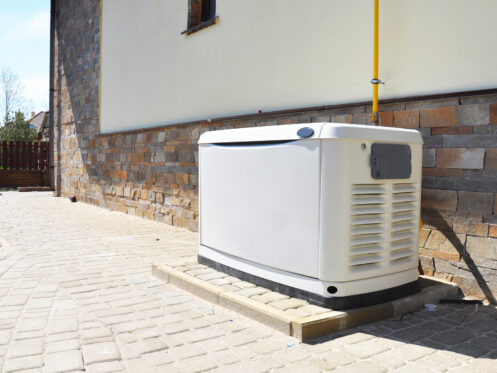
For whole-home protection, a standby generator is often the best solution. These units automatically detect power loss and activate within seconds, restoring electricity without you having to do anything. They run on natural gas or propane, and we permanently install them outside of your home. Standy systems provide long-term reliability and can power your entire home.
Portable Generators
Portable generators are ideal for temporary or partial backup. They’re less expensive and easy to move, but they require manual startup and fuel management. These units are useful if you only need to run a couple of appliances, like a refrigerator. You should never directly connect a portable generator to your home’s wiring.
Choosing between portable and standby power depends on your household’s priorities. If comfort, convenience, and automation are important, consider a standby unit. On the other hand, if your focus is on basic function, a portable generator may fit your needs.
Consider the Fuel Source
It is also essential to consider your fuel source. Natural gas is the most convenient because it connects directly to your home’s gas lines, eliminating the need for refueling.
Propane is another reliable option used more in rural areas where there is no access to natural gas lines. Propane is generally more expensive than natural gas, which is why many homeowners prefer gas.
Diesel is another choice for fuel efficiency and durability, but it can be noisier than some other fuels. Gasoline is standard for portable options but requires careful storage and short-term use.
Always Consult With Professionals
Always consult with professionals before buying or installing a generator. Every home has unique electrical loads, layouts, and fuel access points. At Putnam Mechanical, we evaluate your entire home to recommend the right system for your needs and budget. We also handle permitting, installation, and ongoing support.
Generators Bring Peace of Mind
A generator is more than a backup plan; it’s peace of mind for your family. Whether you want to power a few essentials or your entire home, getting the right size is critical. With expert guidance from Putnam Mechanical, you can prepare for power outages with confidence. Putnam Mechanical is your trusted local provider for HVAC and electrical services. As a family-owned and operated company, we take great pride in offering high-quality products and affordable service.
Contact Putnam Mechanical today to schedule generator services and an electrical inspection in Mooresville. Our experienced team is here to determine your power requirements.