When your commercial heating and cooling system fails, it can disrupt your business. One breakdown can impact customer comfort, employee productivity, temperature-sensitive equipment, and even safety. During an emergency, you need more than a quick response. You need a clear process and repairs that restore reliable operation.
What Counts as a Commercial HVAC Emergency?
Some problems can wait for normal business hours, but others cannot wait that long. A complete loss of heat during freezing weather can threaten pipes and building operations. A total loss of cooling can create unsafe indoor conditions, especially in restaurants, medical facilities, and high-occupancy buildings. Burning smells, sparking, or loud mechanical noises also require immediate attention, since they can point to electrical failure or serious component damage.
Information You’ll Need When You Call
The faster you provide accurate information, the faster our technician can diagnose the problem. When you call, be ready to share your address, the type of equipment involved, and which areas of the building are undergoing the impact. If your building uses multiple units or zones, let us know what is down and what still functions.
If you have access to equipment details, share the unit’s make and model, any visible error codes, and whether the system has shut off completely or still runs without heating or cooling. If you smell smoke or notice an electrical burning odor, shut the system down and report it immediately.
What Happens When the Technicians Arrives
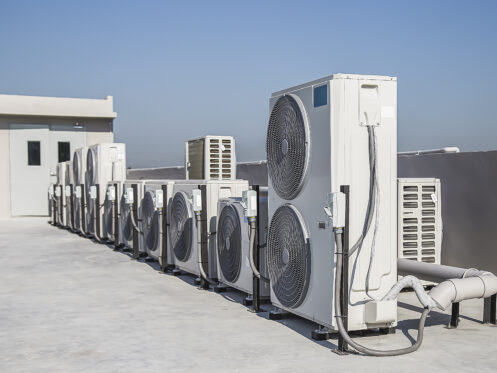
Emergency commercial HVAC service still starts with safety. Many systems sit on rooftops, in mechanical rooms, or behind locked panels. Our team may need roof access, clearance around the unit, and permission to enter restricted areas. Before testing begins, we will check for hazards, such as electrical damage, burned wiring, refrigerant leaks, and water intrusion. If conditions appear unsafe, we may keep the equipment powered off until testing confirms that it is safe to operate.
The First Things a Technician Checks
Commercial systems often shut down because a safety control trips, not because the main component failed. To quickly narrow the issue, we start with power and control checks. We confirm the thermostat or building controls call for heating or cooling, then verify that breakers, fuses, and shutoff switches function.
Next, our team will evaluate why the system stopped. That may involve pressure switches, airflow sensors, condensate overflow switches, or high-limit safety controls. If airflow drops because of a clogged filter or dirty coil, the system may shut down to protect itself.
Repair vs. Stabilization: What Emergency Service Can Realistically Do
Many emergency calls end with a complete repair or replacement the same day, especially when the issue involves a capacitor, sensor, clogged drain line, or loose electrical connection. In other situations, the repair requires special parts that may not be available immediately, especially for older rooftop units.
When parts aren’t available right away, we might stabilize operations to keep the building functional. That could mean restoring partial heating or cooling, addressing the immediate shutdown condition, or adjusting system operation to prevent further damage until the full repair is complete.
What We Test After the Repair
After completing repairs, we will confirm performance before leaving. That includes verifying safe system start-up, measuring supply air temperatures, and checking that the system cycles correctly. For cooling calls, we may confirm refrigerant readings and airflow performance. For heating calls, we confirm proper ignition, stable flame operation, and safe shutdown.
Your technicians may also confirm that the affected zones begin returning to the set temperature. Larger commercial spaces take longer to stabilize, so full recovery can take time even after the system restarts.
How to Reduce Emergency Calls Going Forward
Emergency HVAC calls often start with preventable problems that build up over time. Dirty filters can restrict airflow enough to trigger a safety shutdown, while clogged drains can trip float switches and force the system offline. Worn electrical components may also fail under a heavy load, which is why regular maintenance is important to help catch these issues early. Even one annual service visit can reduce downtime while limiting the high costs of emergency repairs.
Emergency Commercial HVAC Repairs Feel Easier With the Right Process
Commercial HVAC emergencies create pressure, but the repair process follows a clear path. When you know what to expect, you can respond faster, approve repairs with confidence, and get your building back to normal with less disruption. Putnam Mechanical has been providing commercial heating and cooling services to Mooresville, NC and the Greater Charlotte area since 2006, so we are fully committed to keeping your building comfortable year-round.
If you’re experiencing a commercial HVAC emergency, you’ll be in good hands with us. Contact Putnam Mechanical now.